
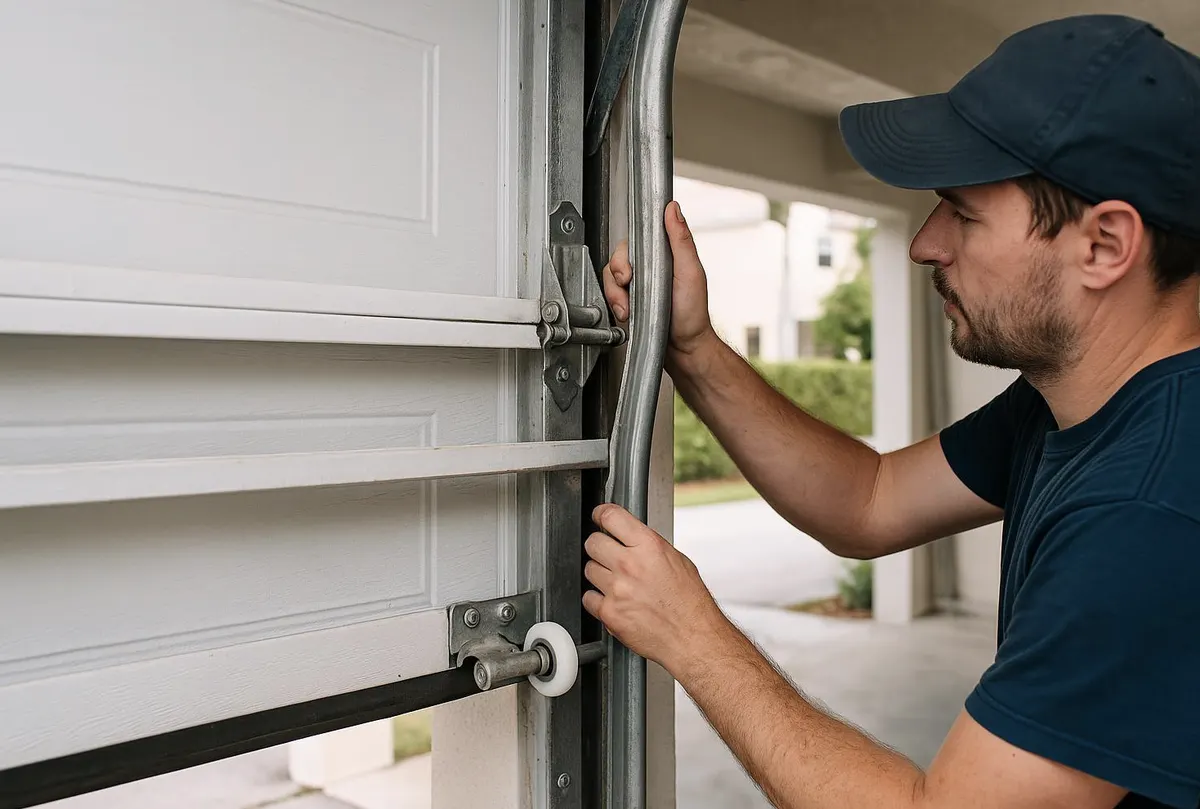
It usually starts the same way: one of you is standing in the garage staring at a door that's rusted at the bottom corners, sagging a little on one side, and finally ready to be replaced. The other one says, "Just order whichever one looks good online." And then someone asks the question that stops the project cold: "Wait, don't we need a permit for that? And didn't the HOA say something about garage doors a few years back?"
If this is the argument happening in your kitchen right now, here's the plain-language version to settle it.
Do You Actually Need a Permit?
In most towns, replacing a garage door with one of the same size, in the same opening, is treated differently than altering the structure around it. A straight swap — old door out, new door in, no changes to framing, header, or electrical for the opener — often falls under lighter rules than a full structural change. But "often" isn't "always," and permit requirements vary by municipality and by the scope of the job.
The only way to know for sure is to call your town's building or inspectional services department and describe exactly what you're doing: same size opening, same opener location, new door material. Ask directly whether a permit is required for a garage door replacement and whether it changes if you're also upgrading the opener or widening the opening. This five-minute call will end the argument faster than any amount of googling, because requirements genuinely differ from one town to the next and change over time.
Why This Matters Beyond Avoiding a Fine
Permits aren't just paperwork. In areas that see real winter weather — ice, snow load, freeze-thaw cycles — inspections exist to confirm the door and its hardware can handle what the season throws at them. A door installed without the right wind resistance rating or without properly anchored tracks can fail exactly when you need it most: mid-storm, with the driveway already a sheet of ice.
HOA Rules: The Part That Actually Starts Most Fights
Permits are a town matter. HOA rules are a neighborhood matter, and they tend to be stricter and more specific. Many HOAs regulate:
- Color — some communities require doors to match an approved palette or the home's existing trim
- Panel style — raised panel vs. flat vs. carriage-house look
- Window inserts — allowed, not allowed, or restricted to certain shapes
- Material — steel, wood-look composite, or real wood, depending on the association's aesthetic standards
None of this is standardized — it comes down entirely to your specific HOA's covenants, which is why one spouse saying "I'm sure it's fine" and the other saying "I'm sure it's not" is a coin flip without actually pulling the document. Before you order anything, read your HOA's architectural guidelines or submit a request for approval if your association requires one. Many HOAs ask for a photo or spec sheet of the proposed door before work begins, and skipping that step can mean reinstalling later at your own expense.
Wind-Load Codes: Not Just a Coastal Issue
Wind-load ratings tell you how much pressure a garage door can withstand before it buckles or blows in. This matters more than people assume inland, because nor'easters bring sustained wind and pressure changes that older, original garage doors were never engineered for. A lot of the housing stock in this part of Massachusetts still has its original door from decades ago — doors that predate current wind-load standards entirely.
When you replace an old door, you have a real opportunity to upgrade to a door with a documented wind-load rating appropriate for your exposure. This isn't about chasing a number for its own sake; it's about the difference between a door that holds its track during a bad storm and one that doesn't. If your home sits in a more exposed spot — end of a cul-de-sac, open yard, nothing blocking wind from one direction — this is worth asking your installer about directly rather than assuming a standard residential door is sufficient.
How These Three Things Interact
Here's where the argument usually gets resolved: permits, HOA rules, and wind-load codes aren't three separate hoops — they can overlap. Your town might not require a permit for a straight swap, but your HOA might still require approval of the style and color. Your HOA might approve a style, but it might not come in a wind-load rating appropriate for your home's exposure. The fix is simple: confirm town permit rules first, get HOA approval on the specific door model and color second, and only then finalize the order with your installer, confirming the wind-load spec in writing.
When to Call Southborough Garage Door
If you're at the point of comparing doors but haven't sorted out the technical side, that's exactly where we come in. Southborough Garage Door handles full garage door installation for homeowners replacing original or aging doors, and we can talk through wind-load options, panel styles, and insulation levels before you commit to anything — including models that tend to satisfy common HOA style requirements without you having to guess. If your current door is already showing its age with sagging, rust, or a spring that's seen one too many freeze-thaw cycles, we also handle spring replacement and full inspections so you know whether repair or replacement actually makes sense before the permit question even comes up.
Settle the argument, make the calls, and when you're ready to talk doors, reach out to Southborough Garage Door — we serve Southborough, MA and the surrounding towns, and we're happy to walk you through what fits your home and your HOA before you buy.